The White Residue Nobody Talks About: What Spokane’s Water Is Doing to Your Home
You’ve probably noticed it. A white film on the shower door that won’t wipe off with a regular cloth. Spots on glasses that come out of the dishwasher looking worse than they went in. A dull, chalky buildup around the base of faucets that reappears days after you clean it. A showerhead that used to have strong pressure and now sprays unevenly, like something is blocking it from the inside.
Something is blocking it. And it’s coming out of your tap every single day.
What’s Actually in Spokane’s Water
Spokane’s water is sourced from the Spokane Valley-Rathdrum Prairie Aquifer, a large underground aquifer that spans parts of Washington and Idaho. This aquifer naturally contains elevated levels of calcium and magnesium, resulting in hard water.
Spokane’s water hardness averages between 120 and 140 parts per million, or around 7 to 8 grains per gallon — placing it firmly in the moderately hard to hard category. Spokane Valley, which draws from the same aquifer system, measures significantly higher at 218 ppm — classified as hard water, where a water softener is recommended.
To put that in perspective: water above 60 ppm is considered hard by the U.S. Geological Survey. Most Spokane households are running water at two to three times that threshold through their pipes, appliances, and surfaces every day.
The minerals themselves — calcium and magnesium — are not harmful to drink. The National Research Council states that hard drinking water generally contributes a small amount toward beneficial total calcium and magnesium human dietary needs. But what those minerals do to the surfaces they touch is a different matter entirely.
What Hard Water Leaves Behind — and Where
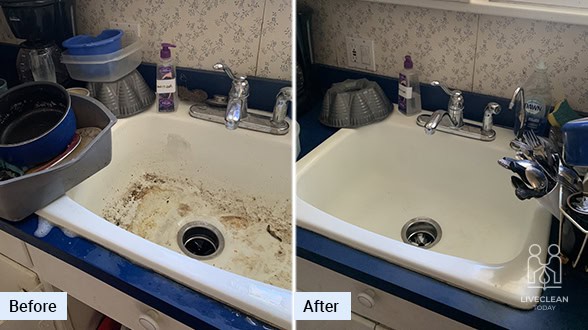
Every time water evaporates from a surface, it leaves the minerals behind. That’s limescale — calcium carbonate deposited in a thin, progressively thickening layer on whatever surface the water touched. In a home with Spokane’s water hardness, that process is happening constantly, on every wet surface, every day.
The surfaces that accumulate the most are the ones that see water repeatedly and dry slowly.
- Shower doors and tile are the most visible victims. The combination of water, soap, and minerals creates a compound residue — soap scum bonded with limescale — that adheres to glass and tile with significant strength. A standard bathroom spray doesn’t dissolve it because it isn’t acidic enough to break down calcium deposits. The result is a film that builds up layer by layer, gets scrubbed with the wrong product, and comes back within days. Many Spokane homeowners have been cleaning their shower doors wrong for years — not from lack of effort, but from using cleaners that weren’t designed for mineral deposits.
- Faucets and showerheads accumulate limescale inside and out. Mineral deposits build up inside pipes, faucets, and showerheads, reducing water flow and increasing maintenance costs. The white buildup visible around the base of a faucet is the external sign of what’s happening internally — a gradual narrowing of the openings that water flows through. A showerhead that loses pressure over time in a Spokane home isn’t aging — it’s calcifying.
- Dishwashers and washing machines are affected in ways that most homeowners don’t connect to water hardness. Dishes that come out spotted or with a white film aren’t the result of a weak detergent cycle — they’re the result of mineral deposits left behind when hot water evaporates during drying. Inside the dishwasher itself, limescale builds up on the heating element, the spray arms, and the interior walls, reducing efficiency over time. Water heaters work harder and wear out sooner when mineral deposits accumulate on heating elements — and the same principle applies to any appliance that heats water repeatedly.
- Sinks and countertops near water sources develop a dull, chalky film that returns quickly after surface cleaning. Stone countertops — granite, quartz, and marble — are particularly vulnerable because the minerals in hard water can etch or dull their finish with repeated exposure.
The Cleaning Problem Hard Water Creates
Here’s what makes hard water particularly relevant for home cleaning: it doesn’t just create deposits — it makes cleaning less effective across the board.
Hard water reduces the performance of soap and detergent. The calcium and magnesium ions in hard water react with soap to form a compound — soap scum — rather than allowing the soap to lather and clean effectively. This means that in a Spokane home, more soap is needed to achieve the same cleaning result as in a soft-water home, and the residue left behind is stickier and harder to rinse away.
This creates a cycle: hard water makes cleaning less effective, which means surfaces need to be cleaned more often, which means more water is used, which deposits more minerals, which requires more cleaning. A bathroom in a Spokane home with no limescale management needs more frequent and more intensive cleaning than the same bathroom in a soft-water area — not because the home is dirtier, but because the water is harder.
The products that actually work on limescale are acidic — white vinegar, citric acid, and commercial descalers formulated for mineral deposits. Standard all-purpose bathroom sprays are neutral or mildly alkaline, which makes them effective for soap residue and surface grime but nearly useless against calcium carbonate. Using the right product for the specific type of buildup is the difference between cleaning that lasts and cleaning that needs to be redone in a week.
A Room-by-Room Look at What Needs Attention
| Room | Hard water impact | What actually works |
|---|---|---|
| Bathroom shower | Soap scum bonded with limescale on glass and tile | Acidic descaler or white vinegar solution, non-scratch scrubbing |
| Bathroom faucets | External buildup, internal flow restriction | Descaling soak for showerhead, acidic cleaner for fixtures |
| Kitchen sink | White film around drain and base of faucet | Citric acid solution, regular descaling |
| Dishwasher | Spotted dishes, scale on heating element | Monthly descaling cycle with citric acid or commercial descaler |
| Washing machine | Reduced efficiency, scale on drum and heating element | Monthly maintenance wash with descaling product |
| Water heater | Internal scale reduces efficiency and lifespan | Annual professional flush recommended |
| Stone countertops | Etching and dulling of finish with repeated exposure | pH-neutral cleaner only, avoid acidic products on marble |
The pattern across every room is the same: standard cleaning products manage surface dirt but don’t address mineral deposits, and mineral deposits compound over time if they’re not specifically targeted.
What You Can Do About It
Managing hard water in a Spokane home doesn’t require a full water softener installation — though that remains the most comprehensive solution. There are practical steps that make a significant difference at the surface level.
Descaling bathroom fixtures monthly, rather than waiting until buildup is visible, keeps deposits from hardening into the surface. A showerhead soaked in white vinegar for an hour once a month maintains water pressure and prevents the gradual calcification that eventually requires replacement. Running a descaling cycle in the dishwasher monthly addresses internal buildup before it affects performance.
For glass shower doors specifically, a daily squeegee after showering — removing water from the surface before it evaporates — is the single most effective preventive measure available. It takes thirty seconds and prevents the majority of soap scum and mineral deposit formation.
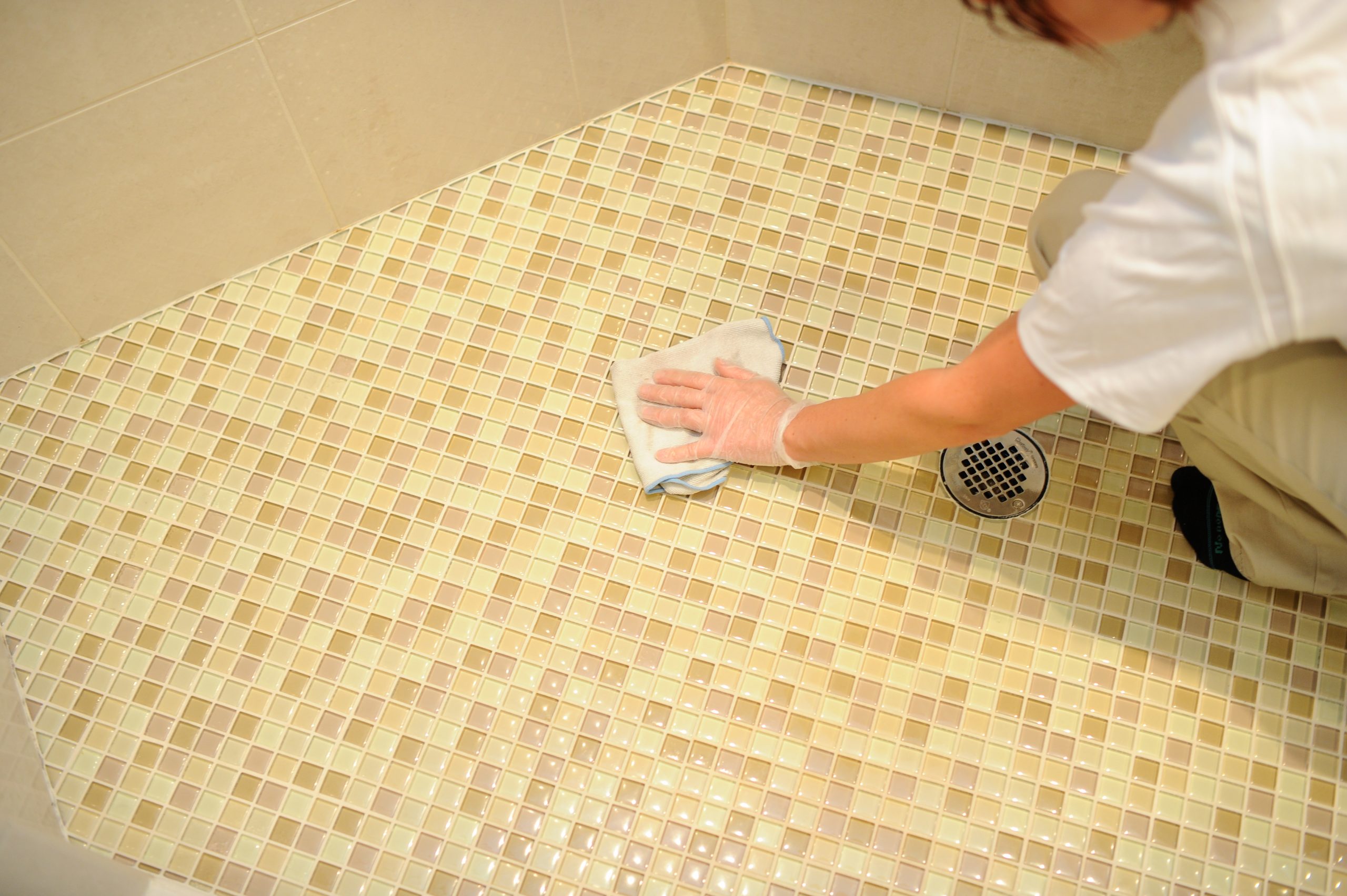
Professional cleaning makes a particular difference in bathrooms and kitchens where hard water has been building up over months or years. The combination of the right descaling products and proper technique removes what household cleaning leaves behind — restoring surfaces that can look permanently stained to something close to their original condition.
Spokane’s hard water isn’t going away — it’s a product of the geology of the Spokane Valley-Rathdrum Prairie Aquifer, and it will keep coming out of every tap in the city. What changes is how well a home manages what it leaves behind.
If your bathroom fixtures, shower doors, or kitchen surfaces have buildup that regular cleaning hasn’t addressed, the Live Clean Today team works with Spokane’s water conditions regularly and knows what it takes to get surfaces properly clean.