The Smell That Stayed: What Wildfire Smoke Does to Your Home
You notice it the moment you walk in. Something heavy, something that doesn’t belong — sitting in the air, in the furniture, in the walls. The fires are out. The sky is clear. But inside your home, something from those first days of August is still there. That’s not your imagination. And it’s not going away on its own.
It’s Not Just a Smell
The instinct is to treat it like a smell — open the windows, light a candle, spray something that advertises “odor elimination” on the label. But wildfire smoke isn’t an odor in the conventional sense. It’s a physical residue. Microscopic particles of soot, ash, and combustion byproducts that traveled through the air and landed on every surface in your home — and then kept going, working their way into the materials themselves.
Porous surfaces absorb these particles below the level that cleaning sprays or fresh air can reach. Fabric, carpet, drywall, wood, mattress foam — all of it acts like a sponge. The particles settle in, and then slowly release odor compounds back into your air over days, weeks, and in serious cases, months. This is why the smell often feels worse two weeks after a smoke event than it did during it. The surface exposure is over. The deep contamination is just getting started.
What Smoke Actually Did to Each Room
Walk through your home right now and what you’re seeing isn’t what’s there. The walls look fine. The couch looks fine. The carpet looks fine. But smoke doesn’t announce itself visually — it operates below the threshold of what eyes can detect, at the level of what lungs and nose can.
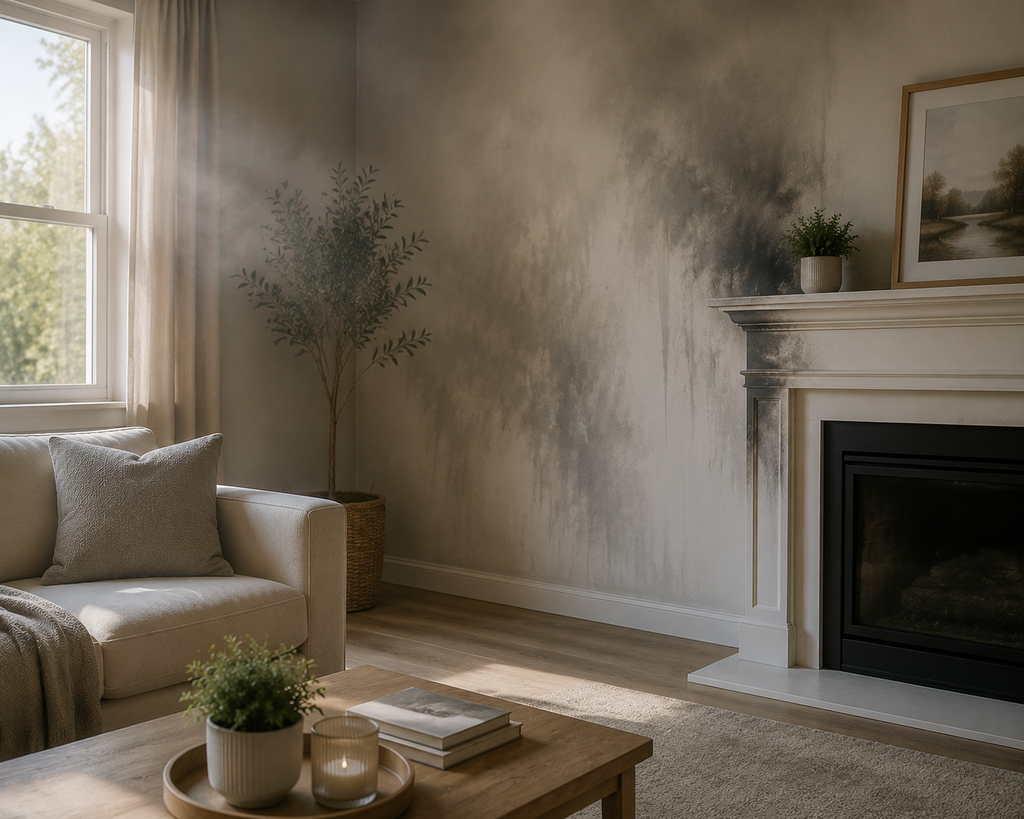
In your living room, the upholstered furniture absorbed more than almost any other surface in the house. Every hour of smoke exposure during those days added another layer of particles into the fibers of your sofa, your armchairs, your rug. Fabric is extraordinarily efficient at trapping what passes through the air — which is exactly why it smells the way it does now.
In your bedroom, the situation is more personal. Your mattress, your pillows, your bedding — these are the surfaces you spend eight hours against every night. Smoke particles in a mattress don’t just affect how a room smells. They affect what you’re breathing while you sleep, in the hours when your body is doing most of its repair work.
In your kitchen, the inside of cabinets and drawers caught particles that most people never think to address. Smoke moved through every space that air moved through — which means enclosed spaces that weren’t sealed airtight absorbed contamination too. The dishes behind those cabinet doors sat in smoky air for days.
And running through all of it is your HVAC system — the one that was working overtime during the August heat, pulling air through your home continuously. Your ductwork is now lined with what it captured during those days. Every time the system runs, it redistributes those particles through every room. The filter you haven’t changed yet is part of the problem, not the solution.
What It Takes to Actually Fix It
Getting smoke odor out of a home after real wildfire exposure is not a weekend project with products from the grocery store. It’s a systematic process that works from the inside out — starting with what’s most deeply embedded and working toward the surface.
Soft furnishings come first, because they hold the most. Curtains, throw blankets, cushion covers, and any washable fabric item should go through the washing machine — with a full extra rinse cycle to flush residue out rather than redistribute it.Items that can’t be machine washed need professional upholstery cleaning or they need to be accepted as permanent smoke carriers.
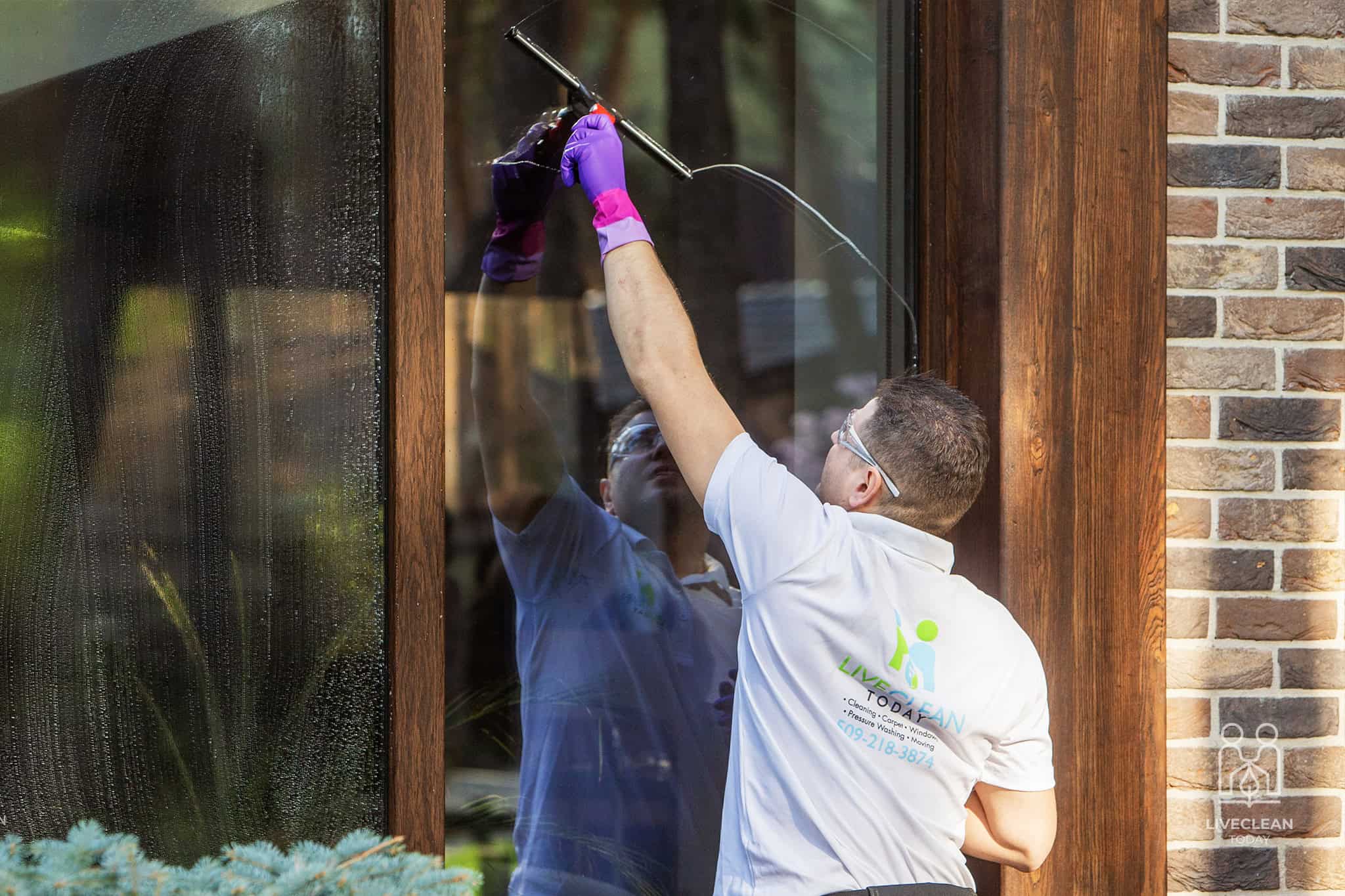
Hard surfaces come next — every wall, every ceiling, every cabinet interior, every drawer, every shelf. Not wiped with a scented spray but cleaned with something that neutralizes odor compounds chemically rather than covering them. Working top to bottom, room by room, including the spaces that don’t normally get cleaned.
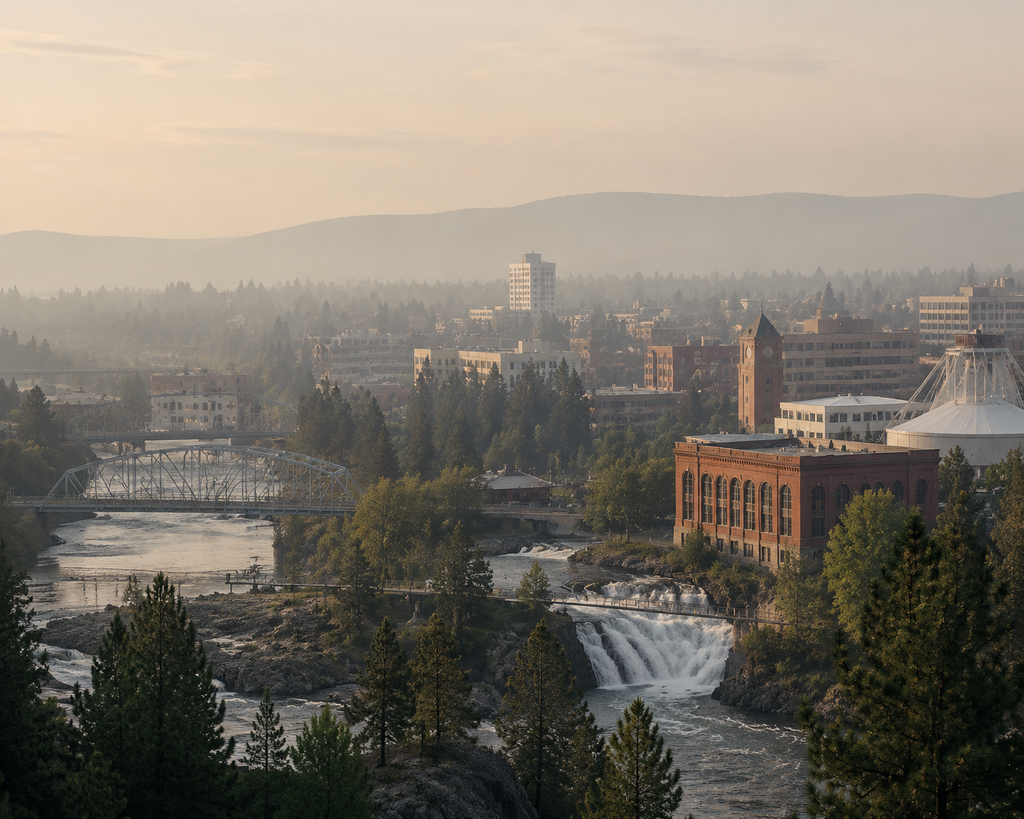
Carpets need more than vacuuming. Baking soda applied overnight before vacuuming with a HEPA-equipped machine will address surface-level particles. For anything deeper — which after the smoke levels Spokane saw is likely — hot water extraction by a professional cleaner is the standard that actually works.
And the HVAC filter needs to come out today. Not this weekend. Today. Replace it, run the system, and replace it again in 30 days. What’s in the ducts will take time to work through — and if your system ran continuously during the smoke event, air duct cleaning is worth considering before that contamination keeps circulating through every room.
Some Things Take More Than Fresh Air
Smoke odor doesn’t fade on its own — it breaks down only when the particles carrying it are physically removed from the surfaces holding them. The longer they stay, the deeper they settle. A home that gets properly cleaned in the weeks after a smoke event will smell and feel genuinely different from one that gets aired out and left alone.
If you’d like help with that cleaning — surfaces, fabrics, filters and all — the Live Clean Today team is here whenever you’re ready.