The Things You Touch Every Day and Never Clean
Think about the last twelve hours in your home. You turned on lights. Opened the refrigerator. Picked up a remote. Turned a faucet handle. Pulled a drawer open. Flushed a toilet. Grabbed a doorknob on the way out and again on the way back in.
Now think about the last time any of those surfaces was actually cleaned. Not wiped in passing. Cleaned.
For most households, the honest answer is that some of them never have been. Cleaning routines are built around what looks dirty — floors, counters, bathrooms, dishes. The things that stay visually clean while collecting everything your hands carry tend to fall outside the routine entirely. They are, in a very literal sense, the dirtiest surfaces in the house.
Why the Dirtiest Things Look the Cleanest
There’s a logic to how people clean, and it’s mostly visual. A floor shows dirt. A counter shows crumbs. A sink shows residue. These surfaces announce themselves, so they get attention.
A light switch does not announce itself. It’s small, it’s usually a neutral color, and the contamination it carries is invisible. The same is true of a remote control, a cabinet handle, a faucet lever, a phone screen. The material transferring to these surfaces is skin oil, bacteria from hands, food residue, and whatever was picked up from every other surface touched before them. None of that shows until it has built up substantially — and by then it’s been accumulating for months.
The second factor is that these objects aren’t surfaces in most people’s mental model of a room. When someone decides to clean the living room, they think about the floor, the coffee table, the windows. The remote sitting on the coffee table is an object, not a surface. It gets moved out of the way during cleaning rather than cleaned.

The Objects That Collect the Most
Light switches and outlet covers are touched by every person in the home multiple times a day, including guests. In a household with kids, the switches in bedrooms, bathrooms, and hallways are being handled by hands that have been outside, on playground equipment, and on school surfaces, often without a hand wash in between. The switch plate in a busy hallway is one of the highest-contact surfaces in any home.
Remote controls are among the worst offenders because of the combination of frequent handling and food. Remotes get used during meals, passed between family members, dropped between couch cushions, and handled by anyone who visits. The textured plastic and the gaps between buttons trap residue in a way that smooth surfaces don’t — which means wiping the top of a remote does very little for what’s collected around and underneath the buttons.
Refrigerator and cabinet handles are touched during cooking, which means they’re being handled with hands that have been on raw ingredients, packaging, and everything else involved in preparing a meal. The refrigerator handle specifically gets touched more times per day than almost any other object in a kitchen, and it’s rarely part of a standard wipe-down.
Faucet handles create a particular problem in bathrooms and kitchens. They’re touched with dirty hands before washing, which means the contamination transfers to the handle and then back to clean hands when the water is turned off. In Spokane homes, faucet handles have a second issue layered on top — the city’s hard water leaves mineral deposits that build up around the base and in the grooves of handles. Removing that buildup takes an acidic descaler and proper technique, which is part of what a professional bathroom cleaning addresses.
Door handles and knobs throughout the house, particularly the front door, the back door, and the bathroom door, carry everything from outside and everything from inside. The exterior front door handle in a Spokane home is exposed to weather, tracked-in conditions, delivery drivers, and every visitor.
Phone screens and keyboards are technically personal items rather than household surfaces, but they sit on kitchen counters and get handled during meals. A phone touched during dinner and set on the counter transfers to the counter, and the counter transfers back.
Toilet flush handles get touched exactly once per use, always before hand washing. This is a well-understood contamination point that almost no one includes in a routine bathroom clean.
What This Means in Practice
None of this is cause for alarm. A home with ordinary contamination on light switches and remotes is a normal home, not a health hazard. But there is a practical consequence worth understanding: these surfaces are how illness moves through a household.
When one person in a family gets sick, the transmission path between them and everyone else runs largely through shared high-touch objects. The remote, the refrigerator handle, the bathroom faucet, the light switches. During Spokane’s cold and flu season — which runs long, from late fall through early spring — these surfaces are doing more work than at any other time of year. A deep cleaning before the season sets in resets what months of routine cleaning skipped.
The same applies to allergens. Whatever is in the air settles on everything, including high-touch objects. After a smoke event, the light switches carry particulate just like the windowsills do — but the windowsills get cleaned and the switches don’t.
How to Actually Address It
The practical fix is not a deep clean. It’s adding these objects to a routine that already exists.
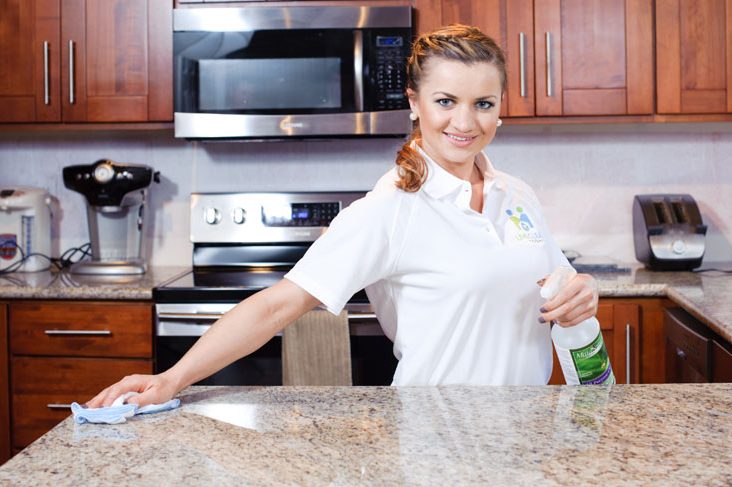
When wiping down kitchen counters, include the refrigerator handle, the cabinet handles nearest the stove and sink, and the faucet. That adds perhaps ninety seconds to a task already being done.
When cleaning a bathroom, include the light switch, the door handle on both sides, the faucet handles, and the flush handle. These are the four objects in a bathroom that get touched most and cleaned least.
For remotes and electronics, use a slightly damp microfiber cloth rather than a spray — liquid and electronics don’t mix — and pay attention to the gaps around buttons where residue collects. A cotton swab handles what a cloth can’t reach.
For light switches throughout the house, a monthly pass with a damp cloth covers every switch plate in a typical home in under ten minutes. In Spokane, this is worth doing more frequently during winter, when the house is closed up and everyone is indoors.
For faucet handles specifically, an acidic cleaner or a white vinegar solution addresses the hard water deposits that a standard spray leaves behind. Removing the mineral buildup makes the surface genuinely cleanable rather than just wiped.
The pattern across all of these is the same: they’re small, they’re quick, and they’re skipped because they don’t look like they need it. A home can be thoroughly cleaned by any reasonable standard and still have every high-touch object in it untouched for months.
If you’d like a cleaning that covers what routine cleaning tends to miss, the Live Clean Today team is here whenever you’re ready.