The Spokane Complex Fires: How to Protect Your Home and Family Right Now
This week has been unlike anything Spokane has seen before. The most destructive wildfire in Washington state history roared into Spokane on Saturday, August 1, creating an urban firestorm that destroyed at least 700 structures and forced nearly 65,000 people to evacuate. The three blazes — collectively called the Spokane Complex Fire — have burned more than 8,000 acres and remain at 0% containment — NBC News
For those who lost their homes, no article can address what you’re facing right now. Our hearts are with every family in Spokane going through this.
For those whose homes are still standing — whether you sheltered in place, evacuated and returned, or are waiting to go back — this guide is for you. Here is what you need to know about protecting your home and your family in the days ahead.
First: Don’t Go Back Until It’s Safe
Before anything else — confirm that your address is no longer under an evacuation order. Check the live evacuation zone map by address at Spokane Regional Emergency Communications before making any decisions about returning home.
Returning too early is dangerous not just because of active fire risk. Smoke, downed power lines, compromised structures, and contaminated water can all pose serious hazards in areas that were recently affected. Follow official guidance and wait for the all-clear before re-entering your neighborhood.
The Air Outside Is Dangerous — And So Is the Air Inside
The Air Quality Alert from the Spokane Regional Clean Air Agency continues until further notice, with widespread smoke from the local Spokane Complex fires and regional fires across central and northeastern Washington. For Monday and Tuesday, air quality is expected to range from Unhealthy to Very Unhealthy.
Most people assume that being indoors protects them from smoke. It helps — but it doesn’t eliminate the risk. Wildfire smoke contains ultrafine particles called PM2.5 that are small enough to penetrate through window gaps, door frames, and ventilation systems. Once inside, they settle on every surface in the home.
What to do right now:
- Health guidance from the Spokane Regional Clean Air Agency advises staying inside as much as possible, cutting back on outdoor activity, and wearing a properly fitted N95 mask — not a fabric or surgical mask — if you must go outside.
- Inside your home, keep windows and doors closed. If you have an air conditioner, switch it to recirculation mode so it doesn’t pull outside air in. Run an air purifier with a HEPA filter if you have one — place it in the bedroom where you sleep. If you don’t have a purifier, keep interior doors closed to limit smoke movement between rooms.
- Monitor air quality hourly at AirNow.gov or SpokaneCleanAir.org, both of which update continuously. Don’t assume the air has improved because the sky looks clearer — PM2.5 is invisible.
When the Fires Are Contained: What to Clean First
Once air quality improves and it’s safe to open windows, the instinct is to air everything out and move on. But smoke contamination doesn’t clear on its own — it has to be cleaned. Here’s where to start:
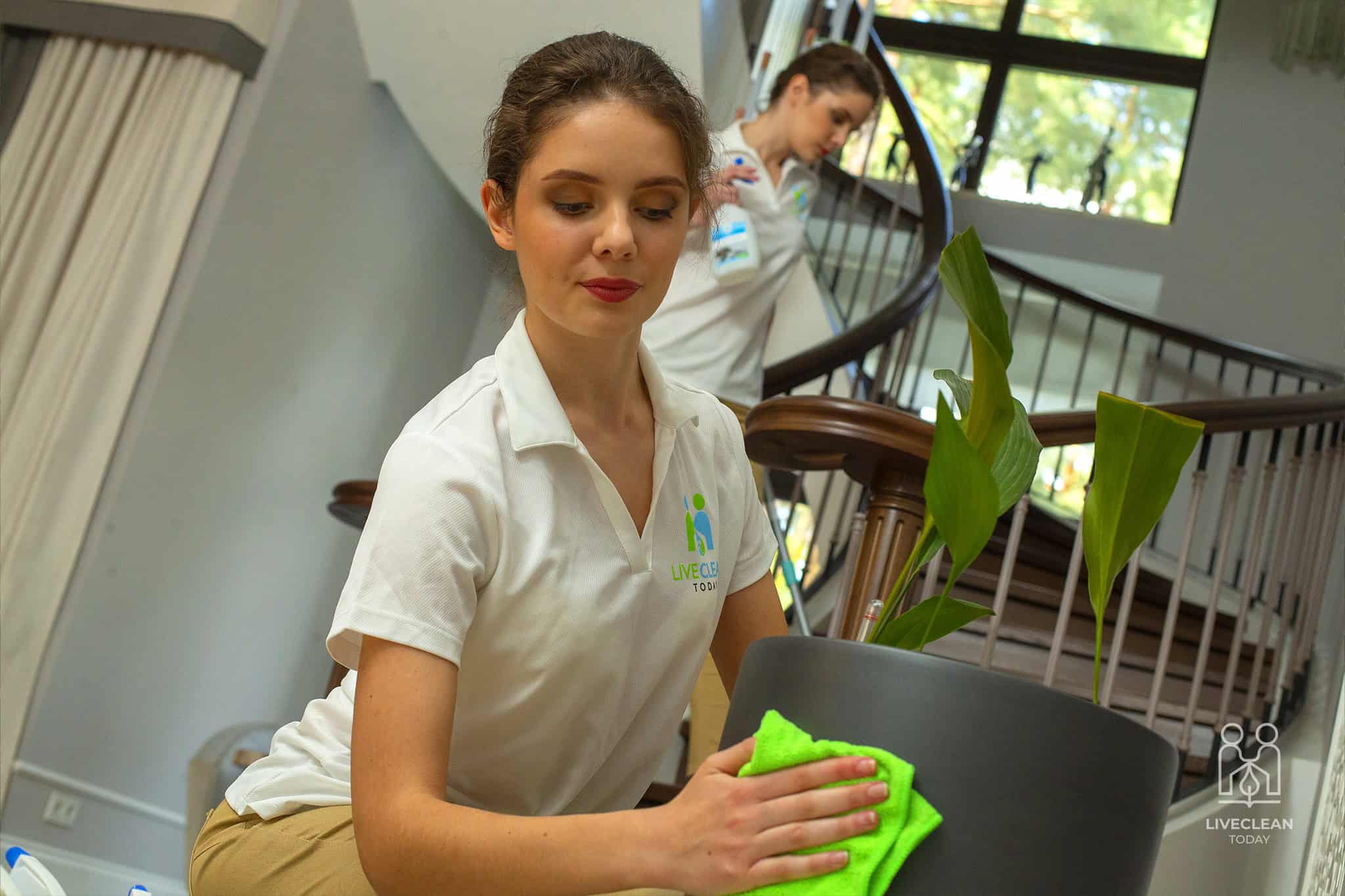
- Wipe every horizontal surface with a damp cloth. Dry dusting or dry sweeping pushes particles back into the air. Use a damp microfiber cloth on windowsills, shelves, countertops, baseboards, and the tops of furniture. Work from top to bottom so particles fall to surfaces you haven’t cleaned yet.
- Wash all bedding, curtains, and soft furnishings. These materials have been absorbing smoke for days. Washing them removes what’s been captured in the fibers. For items that can’t be washed at home — large rugs, upholstered cushion covers — professional cleaning is worth considering.
- Replace your HVAC filter immediately. After days of running during a heavy smoke event, your filter is saturated. A saturated filter stops capturing particles and starts pushing them through the system. Replacing it is one of the most effective single steps you can take for indoor air quality. Look for a MERV-13 filter if your system supports it.
- Clean your air purifier filter. If you’ve been running an air purifier through the smoke event — good. Now check its filter. It has likely reached or is approaching capacity.
- Pay attention to the garage. The garage door seals less effectively than interior doors, and the space has no air filtration. Everything that was in the outdoor air during the fire event is now settled on your garage floor, shelves, and equipment. Before bringing anything from the garage into the house, shake it out or wipe it down.
- Consider the exterior. Ash and smoke residue settle on exterior surfaces — siding, windows, decks, patios — and can be tracked indoors or reintroduced to the air during windy days. Rinsing exterior surfaces when conditions allow reduces the ongoing contamination load.
Resources for Spokane Residents Right Now
- Evacuation zone status: Spokane Regional Emergency Communications
- Air quality updates: SpokaneCleanAir.org
- Emergency shelter: The City of Spokane Convention Center has been opened for displaced residents
- Food benefits replacement: Washington DSHS may be able to replace food benefits lost due to the wildfires — contact DSHS directly for information. Washington State Department of Social and Health Services
A Note From Live Clean Today
Spokane is our community. We work in these neighborhoods, and we know the people who live here. What happened this week has affected all of us.
When the time comes — when the fires are contained, the air clears, and families are ready to start putting things back to normal — we’re here to help with the cleaning work that comes after a smoke event like this. Right now, the only priority is safety.
Take care of yourselves and your neighbors.
See also: Post-Fire Cleanup & Restoration