Wildfire Smoke in Spokane, WA: How to Protect Your Home This Summer
Every summer, Spokane gets hit with smoke. Wildfires burning across Eastern Washington, Idaho, or Oregon can turn the sky yellow-gray within hours — and that hazy, acrid smell means more than just discomfort outside. For most people, the instinct is to close the windows and assume that’s enough. Unfortunately, it isn’t.
What Wildfire Smoke Actually Does Inside Your Home

Wildfire smoke contains ultrafine particles known as PM2.5. They’re small enough to slip through window gaps, ventilation systems, and poorly sealed doors. Standard home air filters don’t remove PM2.5 — they simply aren’t designed for particles that small.
Once smoke gets inside, it doesn’t just float in the air. It settles on everything: upholstered furniture, carpets, curtains, windowsills, shelves, and even clothing left in open closets. After a smoke event, polycyclic aromatic hydrocarbons and heavy metals have been detected on indoor surfaces and in household dust — substances that pose health risks with prolonged exposure.
Here’s the part most people don’t realize: when the skies clear, the contamination doesn’t disappear on its own. Indoor surfaces can retain fire-related pollutants for months after a wildfire, creating ongoing exposure risks long after the smoke has cleared.
What to Do During a Smoke Event
- Keep the house sealed — but think about filtration. Closed windows and doors reduce smoke infiltration but don’t eliminate it. If you run an air conditioner, switch it to recirculation mode so it doesn’t pull outdoor air inside.
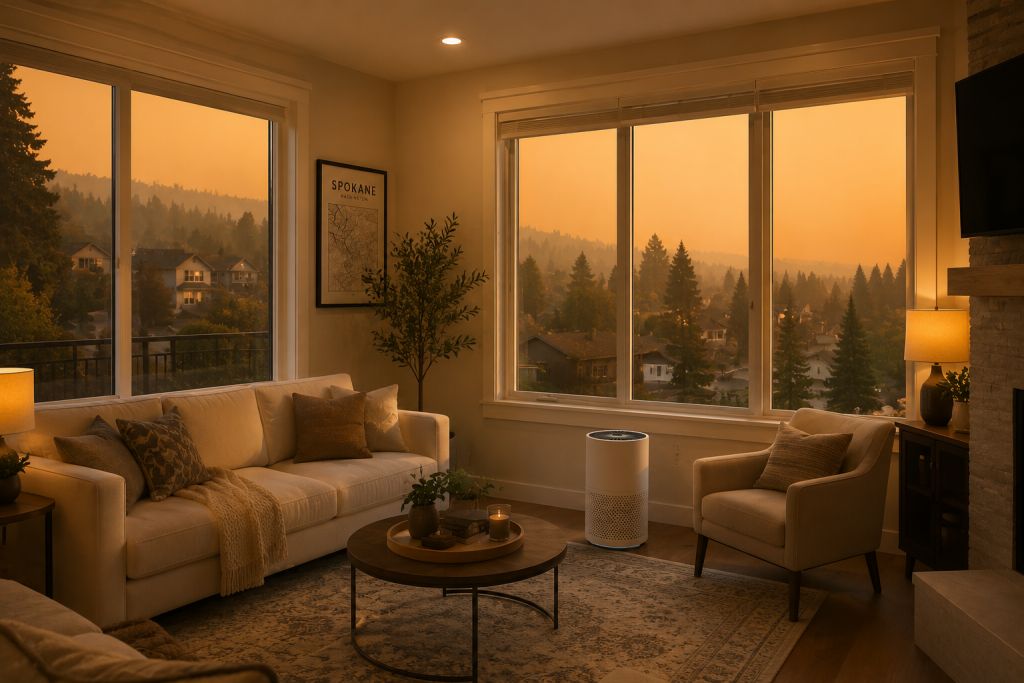
- Use an air purifier with a HEPA filter. MERV-13 filtration has proven highly effective at reducing indoor PM2.5 concentrations during wildfire smoke events. Even a single unit in the bedroom makes a meaningful difference for overnight air quality.
- Don’t add to the problem indoors. During smoke events, avoid burning candles, using a fireplace or wood stove, and vacuuming — all of which can further degrade indoor air quality.
- Wear a mask outside. An N95 or N100 respirator offers the best protection, filtering out most fine smoke particles when you need to go outdoors.
What to Do After the Smoke Clears
This is where most households fall short. People open the windows, air things out, and move on — but the particles that settled on surfaces don’t go anywhere on their own.
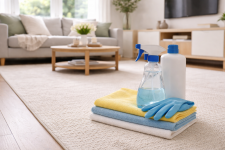
- Wet-wipe all horizontal surfaces. Dry dusting or regular vacuuming just redistributes settled particles back into the air. Every horizontal surface — windowsills, shelves, countertops, baseboards — needs to be wiped down with a damp cloth.
- Tackle the textiles. Curtains, throw blankets, cushion covers, and rugs trap smoke particles more than almost any other surface. After a heavy smoke event, they need to be washed or professionally cleaned — airing them out isn’t enough.
- Replace your filters. After a smoke season, replace the filters in your HVAC system and air purifier. They’ve been working under extreme conditions and are likely saturated.
- Don’t overlook your vents. Kitchen exhaust fans, bathroom vents, and HVAC ducts accumulate settled particles and keep redistributing them through the house long after the smoke is gone.
Spokane and Wildfire Season: This Is an Annual Reality
Eastern Washington’s combination of hot, dry summers, surrounding forests, and easterly winds creates conditions where smoke events can last for weeks. And fire seasons across the Pacific Northwest have been getting longer and more intense each year.
That means protecting your home from wildfire smoke isn’t a one-time task — it’s something worth planning for every summer.
If you’d like a thorough post-smoke cleaning — wet-wiping surfaces, cleaning textiles, and clearing out vents — the Live Clean Today team is here when you’re ready. Just reach out.