Your Air Conditioner Runs All Summer: Why the Air Inside Your Home Is Dirtier Than You Think
When the temperatures in Spokane climb into the 90s — and they do, sometimes pushing past 100°F during heat waves — the air conditioner becomes the most important appliance in the house. Windows stay shut. Doors stay closed. The AC runs all day, sometimes all night. It feels like the right thing to do. And it mostly is.
But here’s what most people don’t think about: while your AC is keeping you cool, it’s also doing something else. It’s circulating the same air — over and over again. And that air isn’t getting cleaner on its own.
What Your Air Conditioner Actually Does to Your Indoor Air
There’s a common misconception that air conditioners bring fresh air into the home. They don’t. An AC unit — whether it’s a central system or a window unit — works by drawing in the air already inside your home, passing it over cold coils, and pushing it back out. The same air cycles through your rooms, again and again, for months.
That process has real consequences. Every time air moves through the system, it carries with it whatever is floating in your home: dust particles, pet dander, pollen that crept in when someone opened the front door, skin cells, cooking residue, and volatile organic compounds (VOCs) from cleaning products, furniture, or paint. None of that disappears. It just keeps circulating — and gradually settling on every surface in your home.
The air inside a home can be significantly more polluted than outdoor air, according to the EPA. In summer, with windows sealed and AC running constantly, that gap can widen considerably.
The Spokane Summer Factor
Spokane’s summers are hot, dry, and long. From late May through September, temperatures regularly push into the 80s, with roughly 21 days per year crossing the 90°F mark. During heat waves — and they’ve been getting more extreme — the AC doesn’t cycle on and off. It runs continuously, sometimes for weeks at a stretch.
That extended runtime matters because it accelerates several problems at once.
- Dust builds up faster than you’d expect. With no fresh air exchange, dust has nowhere to go. It accumulates in ducts, settles on surfaces, and gets picked up and redistributed with every cycle. The more the system runs, the more it moves dust around — unless the filter is clean enough to catch it, which brings us to the next problem.
- Filters get saturated quickly. Most households change their HVAC filters once or twice a year, if that. During a Spokane summer, a filter can reach capacity in a matter of weeks. A saturated filter stops capturing particles and starts pushing them through. At that point, your AC is essentially spreading contaminated air through every room.
- Dry air makes things worse. Spokane summers drop indoor humidity to extremely low levels — sometimes below 40%. Dry air keeps dust particles suspended longer rather than letting them settle, which means more particles stay airborne and more of them pass through the system repeatedly.
- And then there’s wildfire smoke. Eastern Washington’s fire seasons have become longer and more intense. When smoke settles over Spokane — and it does, reliably, every August — ultrafine particles find their way inside even with windows closed. They enter through gaps around doors, through ventilation, and through any outdoor air intake. Once inside, they join the recirculation loop.
What’s Actually Settling on Your Surfaces
If you’ve ever noticed a thin gray film on your windowsills or the tops of bookshelves by the end of summer, that’s not just regular dust. It’s the accumulated output of months of recirculated indoor air — dust, skin cells, pollen, pet dander, and in smoke season, fine particulate matter from wildfires.
Surfaces that sit near air vents tend to accumulate the most. Baseboards directly beneath ceiling vents, the tops of ceiling fan blades, behind and around furniture, and the return air grilles themselves all collect significant buildup over a summer season. Most of it is invisible until you run a finger across the surface.
Textiles hold onto particles even more than hard surfaces. Carpet fibers, upholstered furniture, curtains, and bedding all act as reservoirs for whatever is floating in the air. Unlike a hard surface that you can wipe clean, a carpet can trap years of accumulated particles that regular vacuuming alone won’t fully remove.
The Signs That Your Indoor Air Has Gotten Away from You
Most people don’t notice the gradual buildup until something tips them off. Some common signs:
- Dust reappears unusually fast after cleaning. If you dust a surface and it looks dusty again within a day or two, your system is likely recirculating particles faster than you’re removing them.
- There’s a stale or slightly musty smell when the AC kicks on. This often signals buildup in the ducts or on the evaporator coils — sometimes the beginning of mold or bacteria growth in the system.
- Allergy symptoms persist indoors. If you or someone in your household is sneezing, experiencing itchy eyes, or having respiratory issues even when staying inside, indoor air quality is worth examining.
- You can see a film on vents and grilles. The return air grille — usually a large vent on the ceiling or wall — collects dust and debris faster than almost any other surface. If it looks dark and clogged, your filter situation likely needs attention.

What You Can Do About It
The good news is that most of these problems respond well to a combination of simple habits and periodic deep cleaning.
Change your filter more often in summer. During peak AC season in Spokane, replacing your HVAC filter every four to six weeks — rather than every three months — makes a meaningful difference. Look for MERV-13 filters if your system supports them; they capture far more fine particles than standard fiberglass filters.
Add a standalone air purifier with a HEPA filter. An AC filter is not designed to purify air — it’s designed to protect the equipment. A HEPA air purifier placed in the bedroom or main living area will actively capture fine particles and significantly improve the air you breathe during sleep.
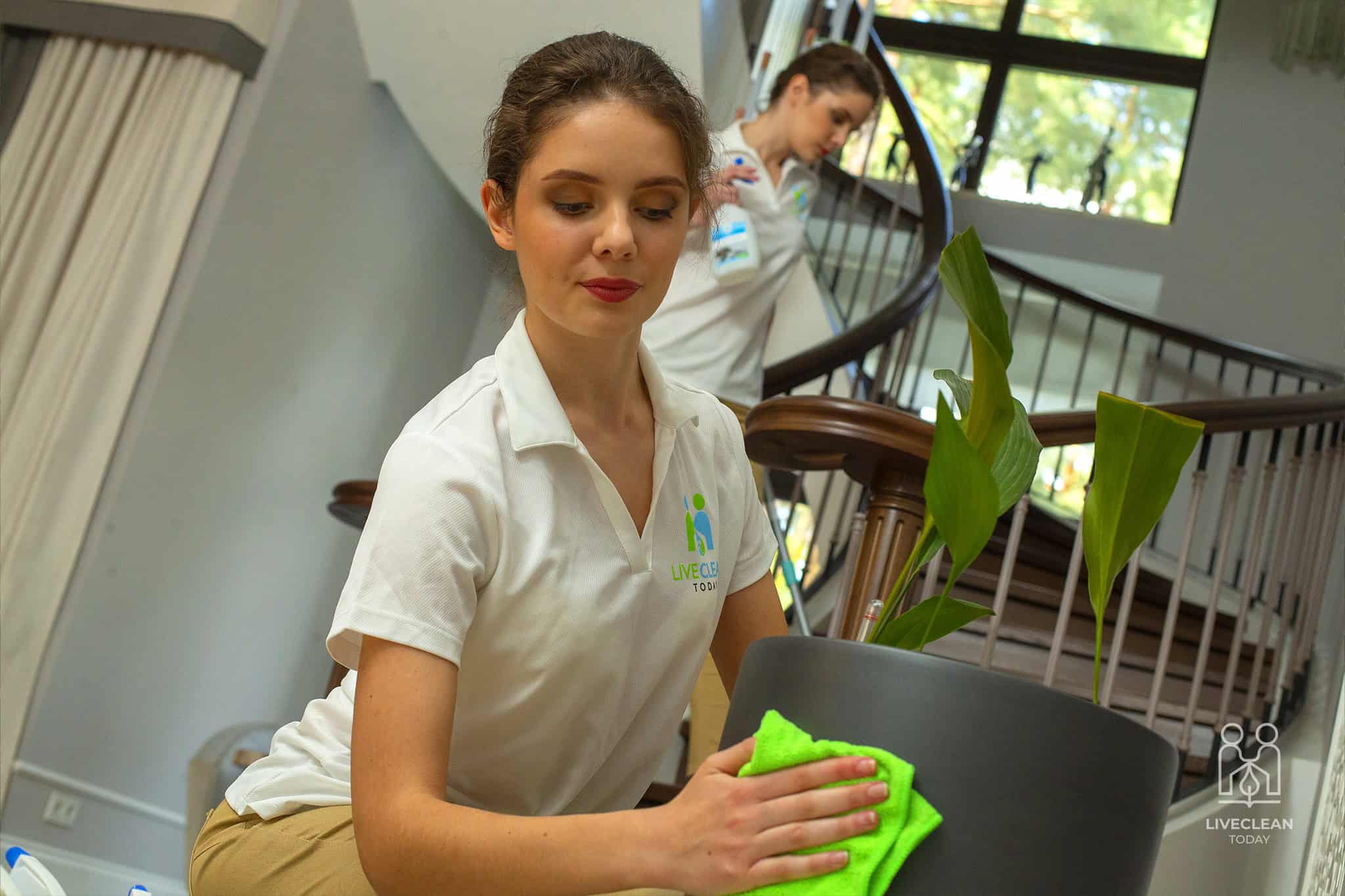
Wipe down vents and grilles regularly. This takes five minutes and prevents the buildup from being recirculated back into the room. A damp microfiber cloth works better than a dry one — dry wiping just sends particles back into the air.
Don’t skip the textiles. Curtains, throw blankets, sofa cushion covers, and area rugs should be washed or professionally cleaned at least once during the summer season, not just at the end of it.
Consider a duct inspection. If your system has been running for years without anyone looking inside the ducts, it’s worth having them checked. Buildup inside ductwork can be significant and isn’t something surface cleaning addresses.
A Good Time for a Reset
By mid-summer, most Spokane homes have already had their AC running for two to three months straight — two to three months of recirculated air, accumulating dust on every surface and in every fiber.
The buildup is already there. A thorough cleaning now makes a real difference in what your family is breathing for the rest of the season — not just in fall when everyone thinks about it.
If you’d like help getting your home properly cleaned while summer is still in full swing, the Live Clean Today team is ready to help. Just give us a call.