Your Garage Is the Dirtiest Room in the House — Especially in Summer
Most people don’t think of the garage as a room. It’s more of a catch-all space — somewhere between indoors and outdoors, where the rules about cleanliness feel different. You wouldn’t leave a pile of dirt on your kitchen floor, but the same pile in the garage barely registers. You’d notice a film of grime on your bathroom counter immediately, but the same buildup on a garage workbench can sit there for months without anyone bothering.
This mental separation between “the house” and “the garage” has real consequences — especially in Spokane summers, when the garage becomes one of the most heavily used and most heavily contaminated spaces on your property. And because it connects directly to your living space, what happens in the garage doesn’t stay in the garage.
Why the Garage Gets So Dirty — And Why Summer Makes It Worse?
The garage is dirty by design. It’s where the outside world enters your home. Every car that pulls in brings road grime, tire residue, brake dust, and whatever was on the surface of the road that day. Every person who walks through brings in whatever was on their shoes. Every piece of outdoor equipment — bikes, camping gear, lawn tools, sports bags — gets stored there between uses, depositing whatever it picked up outside.
In a typical Spokane summer, that list expands considerably. You’re loading and unloading lake gear every weekend. Hiking boots come home caked in trail dust from Mount Spokane or the Centennial Trail. Bikes return from the Centennial Trail with road grime and chain grease. Lawn equipment runs weekly and gets stored with clippings, soil, and fuel residue. Kayaks and paddleboards drip dry on the garage floor after lake trips to one of the dozens of lakes surrounding the city.
And then there’s the heat. Spokane summers regularly push into the 90s and above. In an uninsulated garage — which describes most residential garages — temperatures can climb well past 100°F on a hot afternoon. That heat accelerates everything: it causes oil and fluid residue on the floor to spread and become stickier, it makes tire marks more pronounced, it draws out the smell of stored chemicals, and it creates ideal conditions for insects, rodents, and mold to establish themselves in undisturbed corners.
Add Spokane’s wildfire smoke season, typically peaking in August, and you have fine particulate matter settling on every horizontal surface in a space that has no air filtration at all — just a large door that opens directly to the outside.
What’s Actually Living in Your Garage Right Now?
Let’s be specific about what accumulates in a garage over a Spokane summer, because most homeowners significantly underestimate it.
On the floor: tire tracks containing petroleum-based compounds, brake dust with heavy metal particles, tracked-in soil and organic matter, drips from vehicles including oil, coolant, and windshield fluid, and residue from outdoor equipment. Concrete floors are porous, which means these substances don’t just sit on the surface — they absorb into the material and become increasingly difficult to remove over time.
On shelves and flat surfaces: dust that has settled from the air, including during smoke events; dried dirt and debris from stored equipment; cobwebs in every corner and along the ceiling; insect activity including nests, egg cases, and droppings.
In stored items: outdoor gear that was put away damp or dirty and has since developed mildew or mold. This is particularly common with camping equipment, sports bags, and anything stored in a corner where air doesn’t circulate well. Spokane’s summer heat speeds up this process significantly.
Chemical hazards: most garages accumulate a collection of partially used products — paint, pesticides, fertilizer, motor oil, automotive fluids — that can leak, off-gas, or become unstable in high heat. These aren’t just cleanliness concerns; they’re safety concerns.
Pest activity: garages are a primary entry point for rodents and insects, particularly in late summer when outdoor temperatures become extreme and insects seek shelter. Signs of activity — droppings, gnaw marks, nesting material — are often missed because no one is looking.

How Garage Dirt Gets Into Your Home?
This is the part that matters most for your family’s health, and it’s the part that most people don’t think about.
The garage doesn’t exist in isolation. It connects to your house, usually through a door that gets opened dozens of times a day. Every time that door opens, air from the garage moves into your home. That air carries whatever is suspended in the garage — dust, chemical vapors, particulate matter from wildfire smoke, and allergens from mold or pest activity.
Shoes worn in the garage and then into the house track in whatever is on the garage floor — tire residue, brake dust, oil, soil, and everything else that has accumulated there. Children who play in or near the garage are at particular risk of exposure, since they’re closer to the floor and more likely to touch surfaces and then touch their faces.
The door between the garage and the house is one of the most significant contamination pathways in any home. In Spokane, where summer outdoor activities mean that door is opening and closing constantly — bringing people, equipment, and outdoor gear in and out all day — that pathway is busier than in almost any other season.
What a Proper Garage Cleaning Actually Involves?
Most garage “cleanings” involve moving things around, throwing some stuff away, and maybe sweeping the floor. That’s organization, not cleaning. A genuine garage cleaning that addresses the contamination described above is a more thorough process.
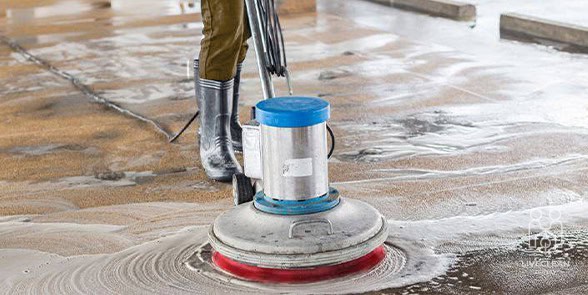
The floor needs more than a sweep. Concrete floors should be degreased and scrubbed, not just swept. Sweeping redistributes dust and fine particles into the air; it doesn’t remove them. A proper floor cleaning involves a degreaser applied to oil and fluid stains, scrubbing, and either wet mopping or pressure washing depending on the condition of the surface. This also helps prevent the long-term concrete staining that becomes very difficult to address once it’s fully set.
Surfaces need to be wiped down, not just cleared. Shelving units, workbenches, and the tops of storage containers accumulate the same dust and particulate matter as any indoor surface — but they’re cleaned far less often. A damp wipe-down of every flat surface removes what has settled there, including wildfire smoke particles from earlier in the summer.
Ceiling and walls deserve attention. Cobwebs in the upper corners of a garage aren’t just cosmetic. They collect dust, debris, and insect activity and periodically release it back into the air. Clearing them and wiping down the upper walls removes a significant source of ongoing contamination.
Chemical inventory is part of the process. A thorough garage cleaning is a good opportunity to identify products that are past their useful life, improperly stored, or potentially hazardous in the summer heat. Many municipalities, including those in Spokane County, offer hazardous waste disposal programs for these items.
Check for pest evidence. While cleaning, look carefully in corners, along the base of walls, behind stored items, and in any undisturbed areas for signs of rodent or insect activity. Finding it early is far easier than addressing an established problem.
How Often Should a Garage Be Cleaned?
For a typical Spokane household, a thorough garage cleaning twice a year — once at the start of summer before heavy use begins, and once at the end of the season before everything gets closed up for fall — is a reasonable minimum. The mid-summer period, after a few weeks of heavy activity and before wildfire smoke season peaks, is also a good time for a quick refresh of surfaces and floors.
Between those deeper cleans, some simple habits make a significant difference: shaking out outdoor gear before bringing it into the garage, keeping a mat at the garage-to-house door to catch shoe contamination, and addressing spills on the concrete floor immediately rather than letting them absorb. It’s also worth looking at what’s happening on the outside of the garage — the driveway apron, the exterior walls, and the area around the garage door collect the same grime and residue that ends up inside. Exterior cleaning of these surfaces a couple of times a season keeps the contamination from being tracked straight back in every time the door opens.
The Connection to the Rest of Your Home

A cleaner garage isn’t just about the garage. It’s about what comes into your house through it. Reducing the contamination load in the garage — the dust, the chemical residue, the tracked-in debris, the particulate matter from smoke season — directly reduces what ends up on your floors, in your air, and on the surfaces where your family lives.
Spokane summers are too good to spend worrying about what’s accumulating in the garage. If it’s been a while since the space got a real cleaning, now is a reasonable time to address it — before the smoke season arrives and adds another layer to everything already in there.
If you’d like help with a thorough garage or whole-home cleaning this summer, the Live Clean Today team is available.